Showing posts with label Animal. Show all posts

Top 10 Fascinating Animal Camouflage

- No comments

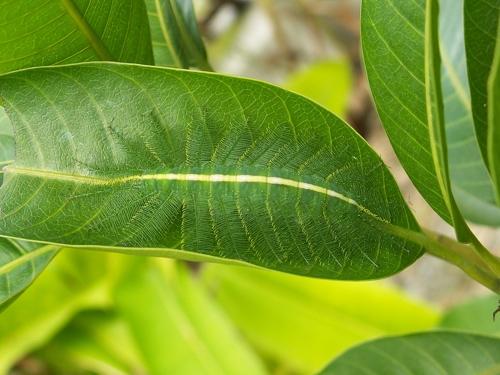
1.Common Baron Caterpillar 

The Common Baron caterpillar feeds on mango trees and cashew nuts during its larvae stage, using remarkable camouflage to hide from predators by seemingly disappearing into foliage. Once metamorphosed it transforms into a light brown butterfly.It is a medium-sized nymphalid butterfly which is a native to India and Southeast Asia.


2. Uroplatus phantasticus

Uroplatus phantasticus, also known as the Satanic Leaf Tailed Gecko is a species of gecko which is only found in Madagascar. It is an arboreal species that relies on its natural camouflage in the northern and central tropical forests of Madagascar.Other names for it are the eyelash leaf tailed gecko or the fantastic leaf tailed gecko.This creature is a master of disguise and you might have a hard time to distinguish this creature from the leaves since all 9 cm of the gecko literally looks exactly like a leaf, right down to the grungy, dead leaf tail.


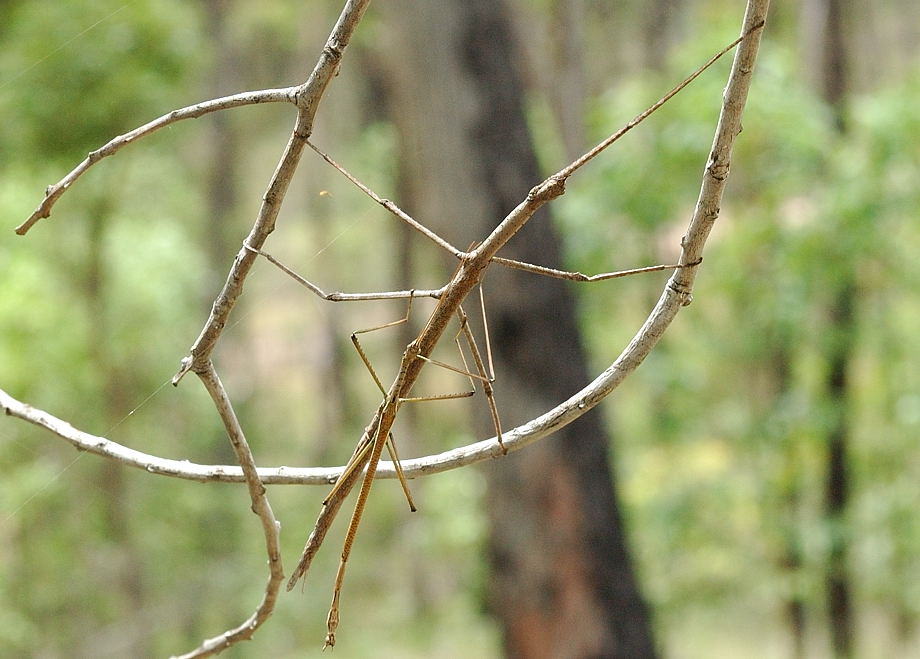
3. Phasmatodea
The Phasmatodea are an order of insects, whose members are variously known asstick insects (in Europe and Australia), walking sticks or stick-bugs (in the United States and Canada). The ordinal name is derived from the Greek wordphasma, meaning an apparition or phantom, and refers to the resemblance of many species to sticks or leaves. Their natural camouflage can make them extremely difficult to spot. Phasmatodea can be found all over the world in warmer zones, especially the tropics and subtropics. The greatest diversity is found in Southeast Asia and South America, followed by Australia. Phasmids also have a considerable presence in the continental United States, mainly in the Southeast.


4. Pygmy Seahorse

A tiny, brightly colored marine animal is an expert camouflage artist and, as the tiniest cousin of the seahorse, is known as the ‘pygmy seahorse’. It takes its name from the fact that it is so tiny, and has often been overlooked by researchers and biologists. Measuring less than an inch in length, it is the smallest seahorse in the world


5. Cuttlefish


Cuttlefish are sometimes referred to as the "chameleons of the sea" because of their remarkable ability to rapidly alter their skin colour at will. Cuttlefish change colour and pattern to communicate to other cuttlefish, to camouflage themselves and in deimatic display to warn off potential predators.


6. Jaguar

The Jaguar (Panthera Oca) is a mysterious animal. Being the largest South American cat, it can live up to 16 years and most species are found in the zoos. The Jaguar lives in the understory, the last or bottom layer in the rain forest, which helps it camouflage with its beautiful fur. The Jaguar’s fur is yellowish- brown in color and coated with irregular black spots. Sometimes people confuse Jaguars with Panthers. They are related, but the Jaguar’s jaw is bigger and its head is heavier.


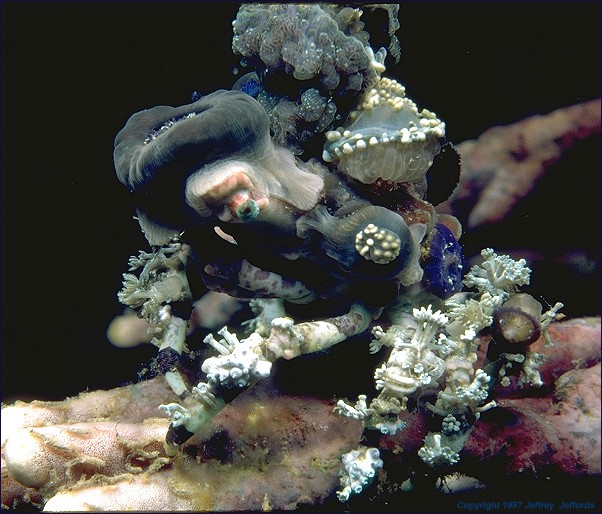
7. Decorator  Crab

Decorator crabs are crabs of several different species, belonging to the super family Majoidea (not all of which are decorators), that use materials from their environment to hide from or warn off predators. They stick mostly sedentary animals and plants to their bodies as camouflage or, if the attached organisms are noxious, to warn off predators through aposematism.


8. Tiger Sharks

These sharks have dark blue or gray backs that blend in with the dark waters near the ocean floor. They also have white or light-yellow bellies that match the light waters near the ocean’s surface. This camouflage makes it hard for other animals to see the sharks, whether they are swimming above or below them. Plus, tiger sharks have stripes on their backs that look like shadows of waves in the water, helping to disguise them even more.


9. Arctic Fox

Scientifically known as the Alopex lagopus , the Arctic fox is also known as the White Fox. Arctic Foxes are found in the Northern hemisphere and mostly live in areas of Northern Canada, Alaska and around the Arctic Circle in the tundra and some coastal areas. The Arctic fox weighs around 2.5 to 9 kg and has a length that measures about 75 to 115 cms. This white fox has been given the name due to its white coat which serves as a camouflage. Once the spring or the summer sets in, this white coat tends to become slightly thinner and the legs along with the back and the tail tend to become slightly brown. Some Arctic foxes even have a bluish coat during the winter season which becomes darker during the summer days.


photo credit
10. Eastern Screech Owl

The screech owls are about 7 to 10 inches tall and have a wingspan of about 18 to 24 inches. They have either rusty or dark gray intricately patterned plumage with streaking on the underparts. Mid-sized by screech-owl standards, these birds are stocky, short-tailed and broad-winged. They have a large round head with prominent ear tufts, yellow eyes and a yellowish bill. Rusty birds are more common in the southern parts of the range; pairings of the two color variants do occur. A pale gray variation also exists in western Canada and the north-central United States. This coloration helps them get camouflage against the tree bark.

photo credit


30 Baby Animals That Will Make You Go ‘Aww’

- No comments

Even though our parents are probably happy and relieved to see us grow up and let go of some baby habits, but in all honesty, some animals could just stay babies for ever – that’s how cute they are! The age of reaching the maturity differs with every specie, and while a kitten might be considered a kid for around a year, and elephant might take 20 to mature!
Just like us, baby animals are curious, naive and big-eyed; only, of course, a wee bit furrier. Learning to tell right from wrong and the best ways to survive takes time, and definitely gives you some amusing photo opportunities if you’re around with a camera to capture it.
Take a break and go through these cute baby animal pictures, radiating all the best vibrations and emotions!

1. Baby Giraffe


Image credits: shizzi

2. Baby Chameleon

Image credits: ckminihane

3. Baby Elephant

Image credits: africanoverlandtours.com

4. Baby Crocodile

Image credits: reddit.com

5. Duckling

Image credits: unknown

6. Baby Deer

Image credits: Jeff Moore

7. Baby Hippo

Image credits: boston.com

8. Baby Hedgehog

Image credits: Blue Lunar Rose

9. Kitten

Image credits: Ben Torode

10. Baby Dolphin

Image credits: dailymail.com

11. Baby Ant Eater

Image credits: unknown

12. Baby Panda

Image credits: unknown

13. Baby Octopus

Image credits: unknown

14. Lamb

Image credits: Geir Magne Sætre

15. Baby Owl

Image credits: owlyoureyes.tumblr.com

16. Baby Sloth

Image credits: superbwallpapers.com

17. Baby Seal

Image credits: imgur

18. Baby Puffer Fish

Image credits: NikazDesignz

19. Bunny

Image credits: NagisaXTomoya<3

20. Piglet

Image credits: unknown

21. Baby Foxes

Image credits: Wenda Atkin

22. Baby Hamster

Image credits: unknown

23. Baby Walrus

Image credits: nytimes.com

24. Baby Fox

Image credits: Igor Shpilenok

25. Foal

Image credits: dailymail.com

26. Baby Skunk

Image credits: Travis Peltz

27. Baby Chinchilla

Image credits: desibucket.com

28. Baby Hippo

Image credits: dailymail.com

29. Baby Dik Dik

Image credits: zooborns.com

30. Baby Penguins

Image credits: Andreas Butz

We do our best to credit every photographer, but some of the pictures have gotten so popular that it’s practically impossible to locate the original source. If you know who took them, or are the photographer yourself, please contact us!

One eyed shark

- No comments

A fisherman has discovered what appears to be a shark with a single eye in the centre of its face.
The albino ‘cyclops’ fetus was cut from the belly of a pregnant bull shark caught in the Gulf of California this summer.

The one-eyed shark has achieved cult status since Pisces Fleet Sportfishing published pictures of it in July, giving rise to rumours of Photoshopping or other hoaxes. Shark researchers say the creature is genuine, although it is unlikely to have survived after birth Shark expert Felipe Galvan Magana, of Mexico’s Centro Interdisciplinario de Ciencias del Mar, said: ‘This is extremely rare. As far as I know, less than 50 examples of an abnormality like this have been recorded.’

The shark’s condition is known as cyclopia, and is a rare congenital disorder characterised by the failure of the front portion of the brain to properly divide the orbits of the eye into two cavities. Cyclopia occurs within the spectrum of brain and face defects known as holoprosencephaly, which in severe cases can result in miscarriage or stillbirth.


New species of dolphin

- No comments
A new species of dolphin is seen in Victoria's Port Phillip Bay, Australia. The new species, Tursiops Australis, which can also be found at Gippsland Lake, have a small population of 150 and were originally thought to be one of the two existing bottlenose dolphin species.


Cute Baby Dolphin

- No comments
A baby dolphin is lowered into a swimming pool just hours after being rescued. The mammal was discovered by walkers on a beach near the Uruguayan capital, Montevideo. It was suffering from injuries believed to have been caused by a fishing net.There was no sign of its mother. The dolphin is only about ten days old. Richard Tesore, head of the NGO Rescate Fauna Marina, has been caring for tiny animal in Piriapolis, 62 miles east of the capital, Montevideo. And while his cute charge is a hit with visitors, it seems they must queue behind a penguin if they want to see him. The Magellan penguin is also being looked after at the centre and has taken an interest in the new patient.

The natural survival rate for dolphins within their first year of life in the wild is 20 per cent. The death toll of captive born dolphins is much higher. According to the US Marine Mammal Inventory Report did between 1960 and 1993 more than 50 per cent of the dolphins born in captivity within the first four months of life.


Two headed Albino snake!

- No comments
Have you ever known there are such creatures as an albino two-headed snake? It has two brains. Each head, principal and subordinate, thinks and feeds separately. The snake was brought to Yalta from Germany within the framework of the project realized in collaboration with the Kiev zoo. With its help it was planned to attract customers’ attention to the exhibition of poisonous snakes.


Such a snake is a rare phenomenon as it seldom survives in natural environment. It is 3 years old and 70 cm long. The wonder of nature prefers eating mice of certain size once a week. The process of feeding requires manual separation of the heads. Otherwise one head can be swallowed by the other one.